
You have found a fiscal sponsor that fits your mission, offers the services you need, and has a strong track record. There is one catch: they are based in a different state. Does that matter?
In most cases, the short answer is no. A fiscal sponsor in another state can legally sponsor your project. Where location does come into play is in the details: state fundraising rules, payroll for staff, and a handful of funders that require an in-state sponsor. Here is what to know before choosing an out-of-state fiscal sponsor.
How Out-of-State Fiscal Sponsorship Works
Fiscal sponsorship lets a charitable project raise tax-deductible donations and apply for grants under an existing nonprofit's 501(c)(3) status. As Candid Learning explains, the sponsor is a public charity that takes on legal and fiduciary responsibility for the project's charitable funds. If you are new to the model, our complete guide to fiscal sponsorship covers the basics.
Why 501(c)(3) Status Crosses State Lines
501(c)(3) status is granted by the IRS, a federal agency, so it applies in every state. According to the IRS, donors can deduct gifts to qualified organizations, and the IRS Tax Exempt Organization Search lists eligible charities nationwide. A donor in Texas can make a deductible gift to a project sponsored by a California nonprofit, just as they could to any other qualified charity.
Model A vs. Model C Across State Lines
The fiscal sponsorship model you choose affects how much state-level work your sponsor takes on.
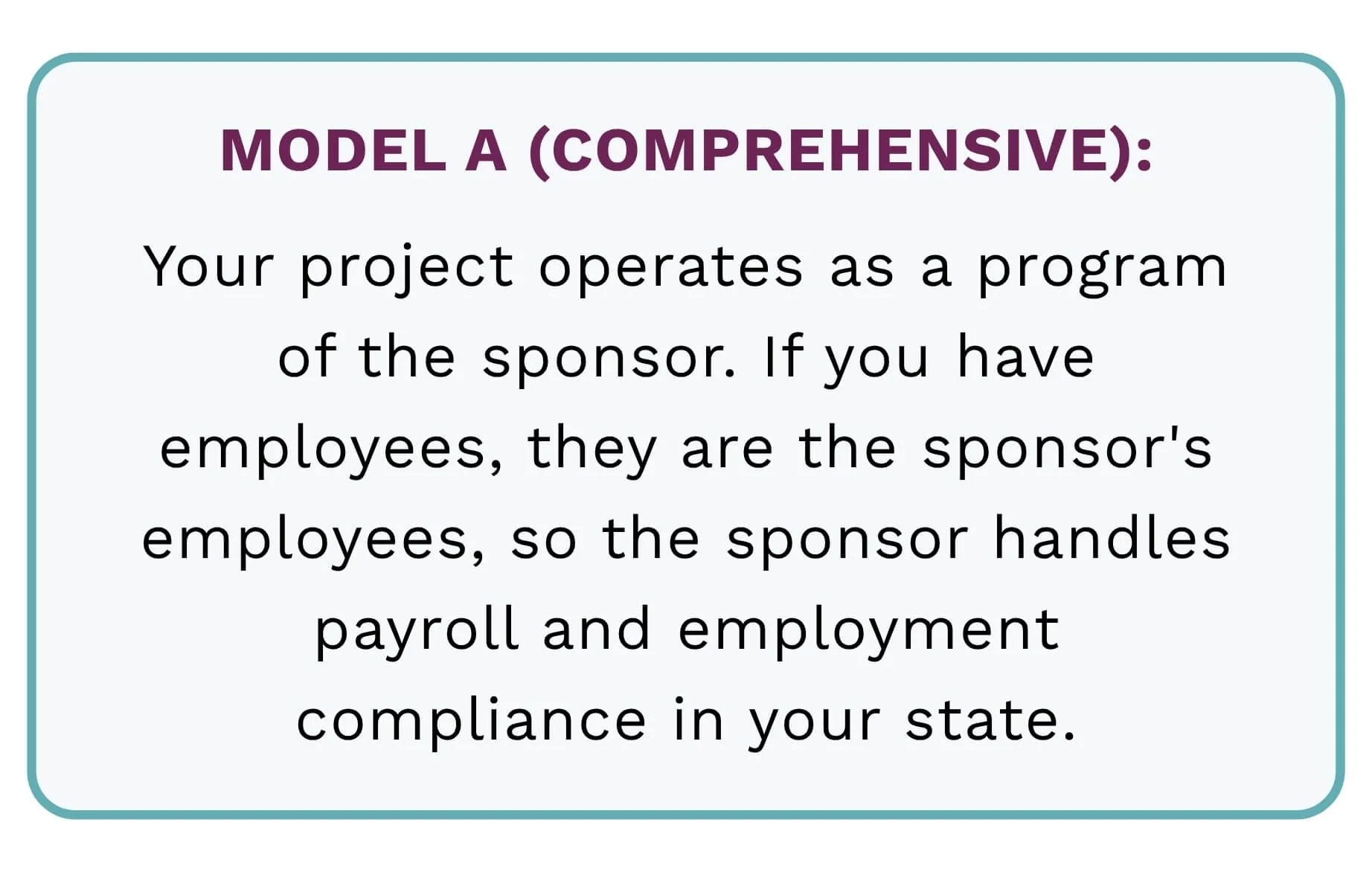
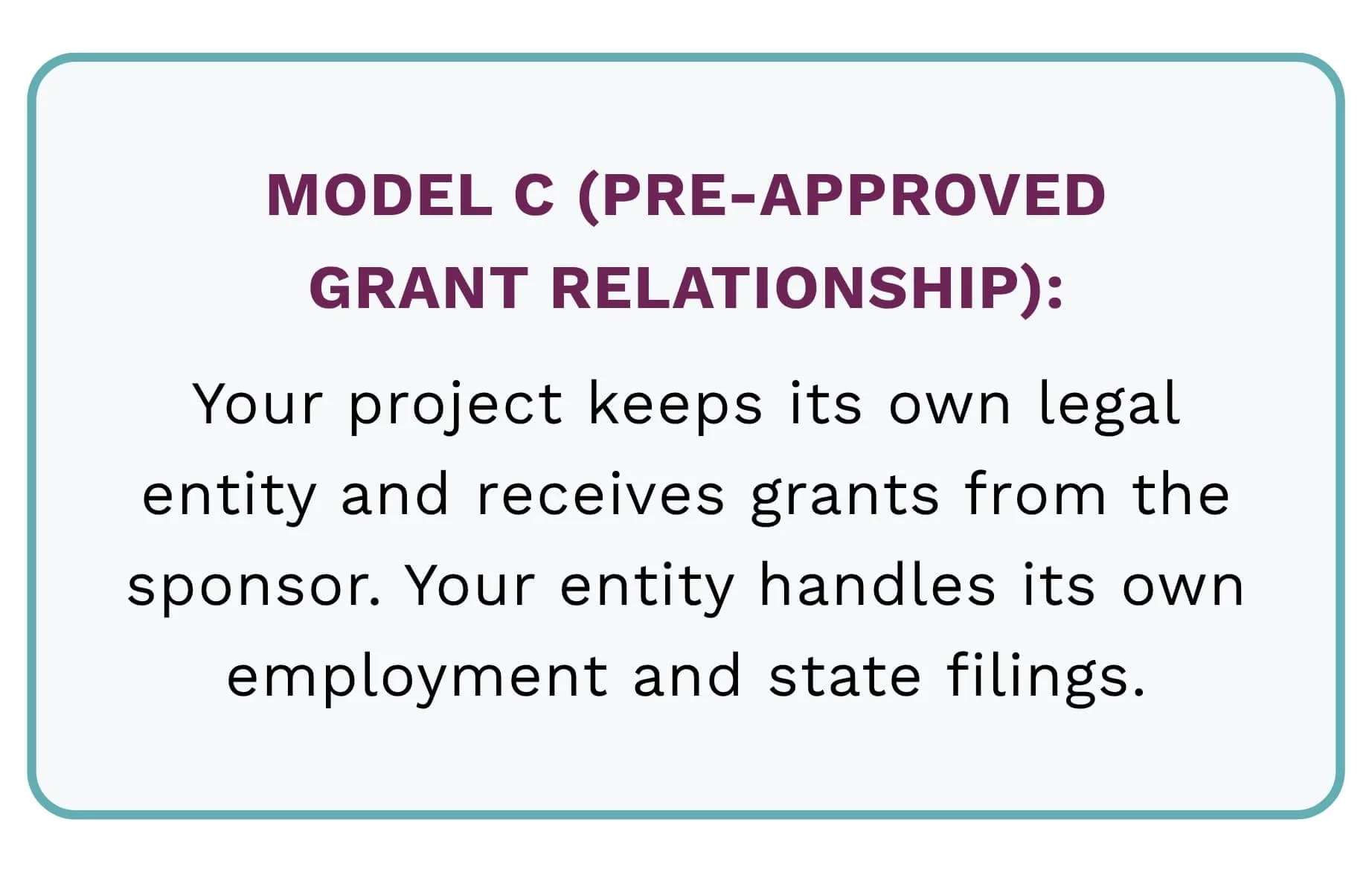
Our breakdown of Model A versus Model C fiscal sponsorship explains each structure in more detail.
State Compliance Factors for an Out-of-State Fiscal Sponsor
Federal tax-exempt status travels well. State requirements do not. The National Council of Nonprofits notes that states set their own rules for corporate registration, employment filings, sales and property tax exemptions, and fundraising. Here is how each one applies when your sponsor is located elsewhere.
Charitable Solicitation Registration
According to the National Council of Nonprofits, 40 states require charitable nonprofits to register before asking residents for donations. Because your project fundraises under the sponsor's name, the sponsor is the organization that needs to be registered in the states where you solicit.
This is not unique to out-of-state sponsors. Online giving pages, crowdfunding, and giving days often reach donors across many states anyway. The question to ask any sponsor is whether it maintains registrations in the states where you plan to fundraise.
Employment and Payroll in Your State
Employment law follows the employee, not the employer. Under a Model A arrangement, a sponsor with staff working in your state generally needs to:
Register as an employer with your state's tax and labor agencies
Withhold state income tax where applicable
Pay state unemployment insurance, which the U.S. Department of Labor notes is set and administered by each state
Follow your state's wage, hour, leave, and workers' compensation rules
These rules can differ significantly from the sponsor's home state.

California, for example, has some of the most detailed employment requirements in the country, which we explore in why HR compliance can't be an afterthought in fiscal sponsorship.
A sponsor with in-house nonprofit HR is better equipped to manage multi-state employees.
State Tax Exemptions and Registrations
Some exemptions are state-specific. The National Council of Nonprofits notes that in some states, nonprofits must apply separately for sales, use, or property tax exemptions. If your project buys equipment, sells merchandise, or leases space, ask how the sponsor handles these exemptions in your state. A sponsor with ongoing operations in a state may also need to register there as an out-of-state (foreign) nonprofit corporation.
State and Local Funders With Location Requirements
This is the factor most likely to affect your fundraising. Some state agencies and local funders require the fiscal sponsor to be based in their state. The California Arts Council's Fiscal Sponsor Policy, for instance, requires both the applicant and the fiscal sponsor to have a principal place of business in California.
Many private foundations and federal programs do not have this restriction, but if a specific state grant is central to your budget, check the eligibility guidelines before you commit to a sponsor.
Questions to Ask an Out-of-State Fiscal Sponsor
Before signing a fiscal sponsorship agreement, ask:
| Question | Why it matters |
|---|---|
| Are you registered for charitable solicitation in the states where we will fundraise? | Unregistered solicitation can lead to penalties in many states |
| Can you employ staff in our state? | Model A projects with employees need a sponsor set up for state payroll and HR compliance |
| Do any of our target funders require an in-state sponsor? | Some state and local grants have location rules |
| How do you handle state tax exemptions? | Sales and property tax exemptions vary by state |
| How do you manage compliance for projects in multiple states? | A sponsor with established multi-state processes can adapt to your state's requirements from day one |
For a sense of what onboarding looks like once these questions are answered, read how fast you can start with a fiscal sponsor.
Common Questions About Fiscal Sponsors in Another State
🤝 Is it legal to use a fiscal sponsor from another state?
Yes. No federal rule requires a fiscal sponsor to be in the same state as the project. State requirements around fundraising, employment, and some grants still apply.
🤝 Will my donors still get a tax deduction?
Yes. Deductibility depends on the sponsor's federal 501(c)(3) status, not its location.
🤝 Can my project hire employees in a different state than the sponsor?
Often, yes. Under Model A, the sponsor becomes the employer and must register and comply with employment laws in the state where your staff work.
🤝 Does an out-of-state sponsor make grant applications harder?
Usually not. Most private foundations and federal funders accept out-of-state sponsors. Some state arts councils and local government programs require an in-state sponsor, so review each funder's guidelines.
🤝 Is a local fiscal sponsor always the better choice?
Not necessarily. Services, compliance capacity, and fit with your mission often matter more than proximity. A local sponsor may make sense if your funding depends on state-specific grants.
Choosing a Fiscal Sponsor for Where You Are Headed
A fiscal sponsor in another state can be a strong partner, as long as it has the systems to handle state-level fundraising registration, payroll, and compliance where your project operates. The right questions upfront can prevent surprises later. To see what that support looks like in practice, read how Scientella grew from a student-run initiative into an international STEM organization under Mission Edge's infrastructure.
Mission Edge serves nonprofits nationwide, offering fiscal sponsorship with accounting, HR, and operations support built in.