
What Does a Fiscal Sponsor Actually Do, Day to Day?

Ask most nonprofit leaders what fiscal sponsorship is, and they can usually give you the general idea: an established 501(c)(3) extends its tax-exempt status to a project so that project can accept tax-deductible donations and apply for grants without forming its own nonprofit. What's less obvious is what a fiscal sponsor is actually doing between the moment a donation lands and the moment those funds reach a program. That gap is where the administrative fee lives, and for anyone weighing whether that fee is worth paying, it's worth a closer look at what actually fills it.
Fiscal sponsorship fees typically run between 5% and 15% of managed funds, and pricing questions come up often. Understanding the day-to-day workload behind that fee is the clearest way to judge whether a given fiscal sponsorship arrangement is a good value for your organization.
A Typical Week Inside a Fiscal Sponsorship
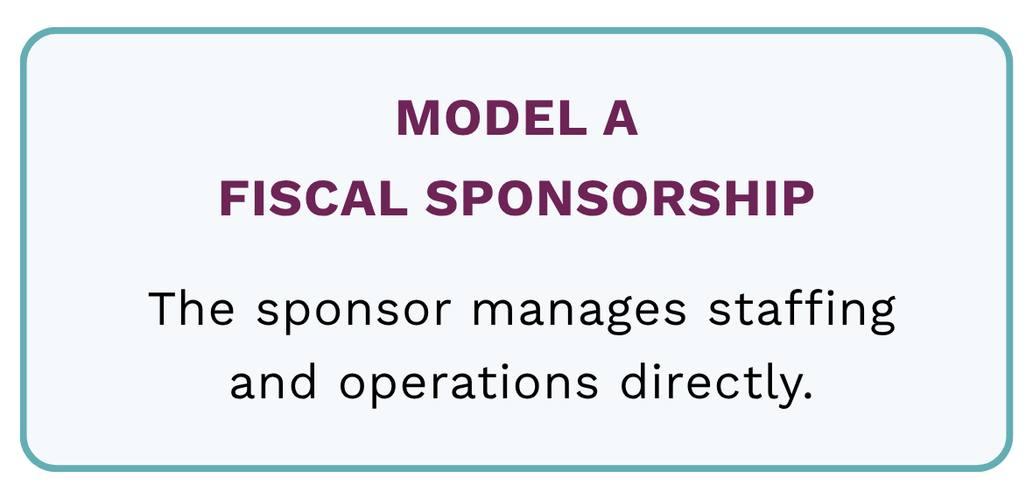
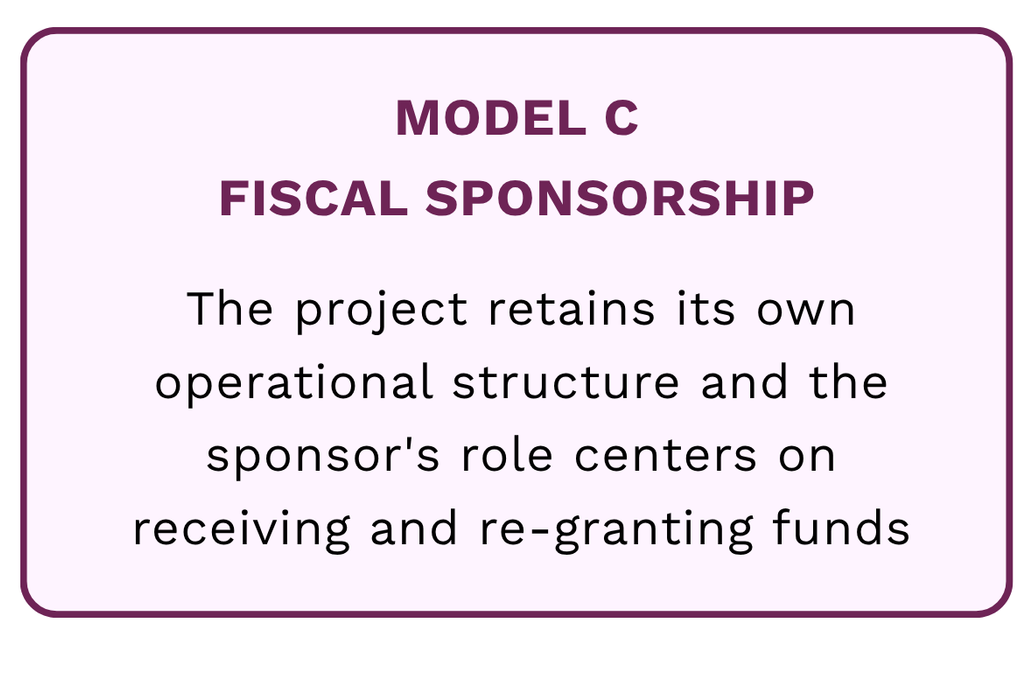
The bulk of a fiscal sponsor's work happens on a weekly cadence, not as a single annual hand-off. Exactly how much of this the sponsor takes on depends on the sponsorship model:
Donation Processing and Donor Receipting
Every gift that comes in has to be logged, matched to the correct sponsored project, and reviewed for alignment with the project's approved charitable purpose. That review isn't a formality.
The National Council of Nonprofits notes that the fiscal sponsor must exercise genuine discretion and control over how donated funds are used, since that oversight is what makes the donor's tax deduction valid in the first place. Once a gift clears review, the sponsor issues a tax-deductible receipt to the donor.
For a sponsor managing dozens of projects at once, that's a constant stream of individual transactions running in the background, not a lump sum that shows up once a year.
Payroll, Benefits, and HR for Sponsored Teams
For projects under Model A, the fiscal sponsor is the employer of record. That means running payroll, withholding and remitting taxes, administering benefits, maintaining workers' compensation coverage, and keeping employment practices compliant across whatever states or jurisdictions the sponsored team works in. Mission Edge folds this work into its nonprofit HR services, so a sponsored project's staff get the same level of HR support as an independent nonprofit would build for itself, without having to build it.
The Monthly and Quarterly Rhythm of Fiscal Sponsorship
Grant Compliance and Restricted Fund Tracking
Grant dollars almost always come with restrictions on how and when they can be spent, and those restrictions have to be tracked at the fund level, not just the project level. A fiscal sponsor monitors spend-down against approved budgets, flags variances before they become funder relations problems, and prepares the financial reporting most grant agreements require on a monthly or quarterly basis.

For a closer look at how this plays out for grant-funded work specifically, see our guide to financial controls that matter most for grant-funded projects.
Financial Statements and Reconciliation
Monthly close, account reconciliation, and board-ready financial statements are recurring obligations, and a sponsor is typically doing this simultaneously across every project it holds, each with its own chart of accounts, funders, and reporting deadlines.

This is the same discipline Mission Edge applies through its nonprofit accounting services, where full-cycle bookkeeping and reporting are built to give sponsored projects and their boards accurate, current numbers rather than a year-end surprise.
The Compliance Work Nobody Sees
A lot of what a fiscal sponsor does is invisible until something goes wrong, which is exactly the point. That includes maintaining general liability and directors and officers insurance, preparing for annual audits, filing the sponsor's Form 990, and keeping policies current with changing employment law. This work is rarely uniform across states. Our breakdown of fiscal sponsorship in California is a good example of how much state-specific HR compliance alone can add to a sponsor's workload.
Curious what this looks like when it goes right over years, not months? Take a look at how fiscal sponsorship supported Scientella's growth into an international STEM organization from an early-stage project into an independent nonprofit.
What the Fiscal Sponsorship Revenue Allocation Typically Covers
Everything described above is what the administrative fee is generally funding: donation processing and receipting, payroll and HR for sponsored staff, grant compliance and fund tracking, monthly financial reporting, insurance, and audit preparation. According to Propel Nonprofits' guide to fiscal sponsorship, fees generally fall between 5% and 15% of the funds a sponsor manages, and the Fiscal Sponsor Directory reports that nearly half of sponsors charge a flat rate somewhere in the 5% to 10% range. Grantmakers in the Arts has also noted that sponsors handling government-funded projects sometimes charge toward the higher end of that range, since federal funding tends to carry stricter audit and reporting standards that add work on the back end.
Because cost structures and included services vary from sponsor to sponsor, the percentage alone doesn't say much on its own. What it buys, and how that compares to the cost of building the same functions independently, are worth weighing side by side.
Our guide on how scaling nonprofits can find a reputable fiscal sponsor walks through the questions worth asking before signing on, and this look at why an integrated accounting and HR model sets sponsored projects up for independence digs into how the scope of services bundled into a fee can differ from one sponsor to the next.
Fiscal sponsorship works best when a project can see exactly what it's paying for.

Mission Edge's fiscal sponsorship program pairs that administrative fee with integrated nonprofit accounting and HR support, so projects get a full back office rather than a bare-minimum one.
If you're weighing whether fiscal sponsorship makes sense for your organization, contact our team to talk through your options.