Maximizing Your Nonprofit’s Greatest Asset: Your Employees
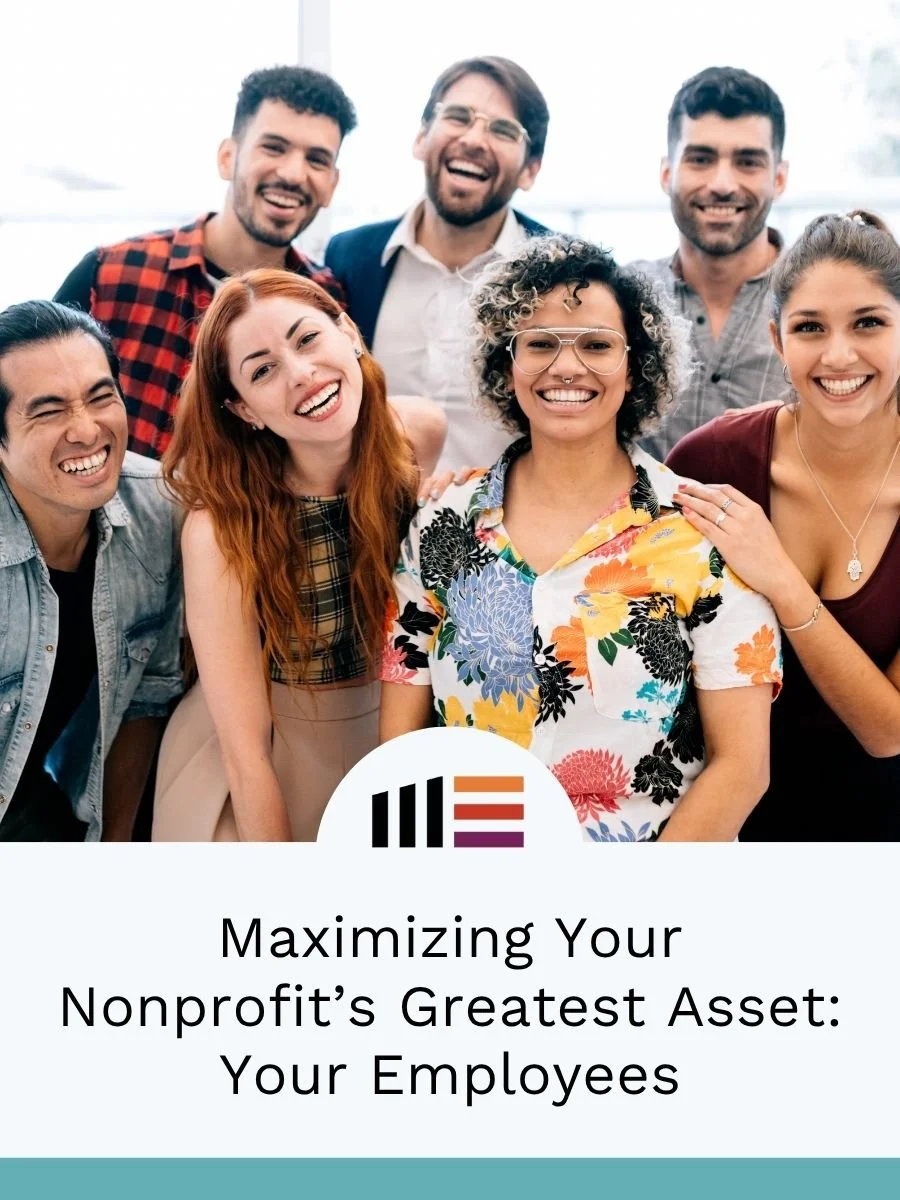
Your nonprofit’s greatest asset is its employees.
They deliver programs, serve communities, manage grants, build relationships with donors, and bring your mission to life. Maximizing that asset requires more than hiring talented people. It requires thoughtful nonprofit HR, competitive nonprofit employee benefits, accurate nonprofit payroll, and reliable nonprofit accounting.
For small and growing nonprofits, managing the employee lifecycle can be challenging.
Hiring, onboarding, benefits, payroll, performance management, and offboarding each come with administrative, financial, and compliance responsibilities. These tasks often fall to an executive director, finance manager, or operations employee who is already balancing a long list of responsibilities.
The challenge is not simply finding a payroll system or creating an employee handbook. Nonprofits need a coordinated approach to managing their employees that fits their size, staffing model, funding sources, and actual needs.
This is where many organizations get stuck.
A nonprofit may purchase a large, all-in-one HR and payroll package because it appears to offer everything in one place. But “everything” is not always the same as “everything you need.”
An organization may pay for technology, features, and administrative services designed for a much larger organization while still needing something that package cannot provide: personalized guidance from people who understand the organization’s unique operations, employees, funding, and mission.
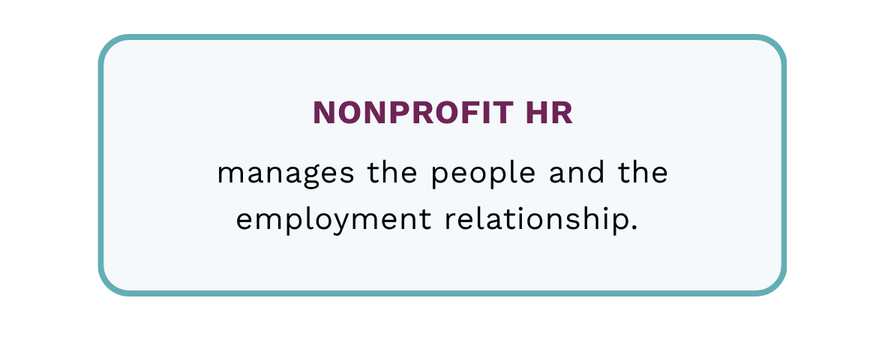
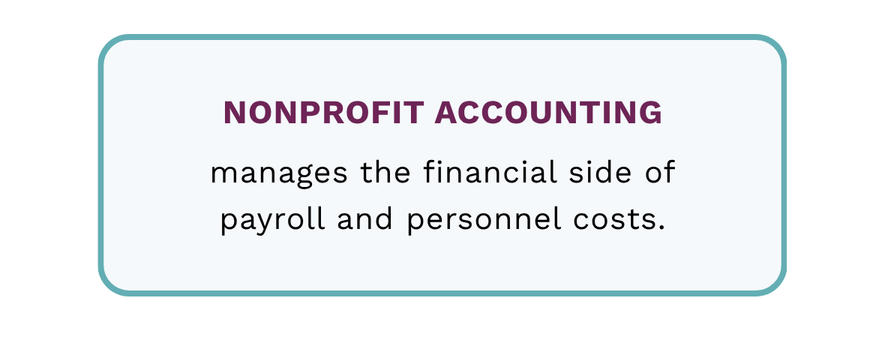
There is another important distinction that all nonprofits should understand: HR and accounting are connected, but they are not the same function.
The goal is not to create the most complicated system. It is to create the right system, supported by the right people, so nonprofit leaders can focus on advancing their mission.
Nonprofit Hiring Starts Before the Job Is Posted
Hiring a new employee is more than writing a job description and posting an opening. A strong nonprofit hiring process begins with understanding why the position exists, how it will be funded, and what success will look like.
Before recruiting, nonprofits should clarify:
The purpose and responsibilities of the position
Whether the position is full-time, part-time, temporary, or grant-funded
The appropriate compensation range
Whether the position is exempt or nonexempt under applicable wage and hour laws
The source of funding for the position and any grant restrictions related to personnel costs
How performance will be measured
This is also where financial management and human resources intersect.
A position may fit within an annual budget, but that does not necessarily mean the nonprofit has considered the full cost of employment. Salary is only one component. Payroll taxes, workers’ compensation, health insurance, retirement contributions, paid time off, recruiting costs, and other benefits can significantly increase the total cost of an employee.

Good nonprofit accounting helps leadership understand the full financial impact before making a hiring commitment.
Mission Edge’s HR team sees this play out well before an offer letter is ever drafted, and not only in searches for executive-level talent. Every recruiting process, regardless of the role, reflects on the organization.
A search that is organized, compliant, and communicative at each stage gives candidates first-rate experiences. A disorganized or unresponsive process sends the opposite message. Recruiting is one of the more overlooked opportunities nonprofits have to make a strong first impression.
How Can Nonprofits Compete for Talent?
Nonprofits frequently compete for employees who could work in multiple sectors. Compensation matters, but so do flexibility, benefits, professional development, workplace culture, and a clear connection to mission.
The Bureau of Labor Statistics reported that in March 2025, retirement benefits were available to 72% of private-industry workers.
For nonprofits, this creates a practical challenge. An organization may not be able to match every benefit offered by larger employers, but it can evaluate its overall employee value proposition.
That may include:
Flexible or hybrid work arrangements
Competitive paid time off
Professional development opportunities
Retirement benefits
Health insurance or other health-related benefits
The right combination depends on the organization. The key is understanding what employees value and what the nonprofit can sustainably afford.
Nonprofit HR and Onboarding: The Employee Relationship Starts on Day One
A signed offer letter is not the end of the hiring process. It is the beginning of the employee relationship.
Effective nonprofit HR practices connect recruiting, onboarding, policies, payroll, benefits, technology access, and organizational culture.
A new employee should know:
What their role is and what is expected
Who they report to
How and when they will be paid, and how to record time, if applicable
How to request paid time off and what benefits are available
Which policies, systems, and required training apply to them
How their performance will be evaluated
The IRS outlines several employer responsibilities for tax-exempt organizations, including determining employee status, collecting required employee information, withholding and depositing applicable taxes, and filing required payroll tax returns and wage reports.
Onboarding is not simply an HR function. It also has financial and compliance implications.
Mission Edge’s guidance on best practices for nonprofit onboarding emphasizes the importance of preparing before an employee’s first day and providing a structured experience that helps new team members understand their role and the organization.
At Mission Edge, orientation goes beyond forms and system access. New hires get a full cultural and organizational deep dive, including the organization’s timeline and history and the pivotal moments that shaped it, so they understand not just what the organization does but why it exists.
A few pieces of fun, branded swag round out the experience. These details are small on their own, but together they help new employees continue connecting the dots between their role and the organization’s mission well past the first week.
Nonprofit Employee Benefits Require More Than a Checkbox
Benefits are often one of the more complicated parts of managing employees.
Health insurance, retirement plans, paid time off, workers’ compensation, disability coverage, and other benefits can create ongoing administrative responsibilities. The rules can also vary depending on the type of benefit, the organization’s location, and the structure of the plan.
For nonprofits, nonprofit employee benefits should be evaluated from both a human resources and financial perspective.
Questions to ask include:
What benefits do employees actually value?
What can the organization afford now?
What will benefits cost as staffing grows?
Who is responsible for administering each benefit?
How are employee deductions recorded in payroll?
How are employer contributions recorded in accounting?
Are benefit costs properly allocated to programs, grants, or administrative functions?
What happens to benefits when an employee leaves?
A benefits package should not be selected simply because it is available within a software platform. It should fit the organization’s workforce and financial capacity.
Mission Edge partners with nonprofits to build a benefits package that addresses the organization’s actual needs, through benefits administration, broker referrals, and benchmarked recommendations that show how an organization’s offerings compare to similar peers.
Mission Edge also helps run an organized open enrollment process, complete with collateral materials that clearly explain each option, and those same materials can do double duty during recruiting, giving candidates a clear look at what the organization offers before they accept a role.
HR Manages the People. Accounting Manages the Money.
One of the biggest challenges for small and growing nonprofits is determining who should be responsible for each part of the employee lifecycle.
Hiring, onboarding, employee relations, benefits, performance management, and offboarding generally belong in the HR swim lane.
Payroll, however, sits at the intersection of HR and accounting and has an important accounting function that should not be overlooked. The distinction matters.
Payroll is not simply a button you push in an HR system. It is an accounting transaction.
Gross wages, employee withholdings, employer payroll taxes, benefits, retirement contributions, accrued paid time off, and other payroll-related costs must be recorded accurately in the accounting system.
For nonprofits, payroll accounting can become even more complex because personnel costs may need to be allocated among:
Programs
Management and general expenses
Fundraising
Individual grants, projects, or contracts
Restricted / Unrestricted funds
For organizations that receive government funding or grants, payroll may also need to be supported by appropriate timekeeping and allocation procedures.
HR may provide the employee information, pay rates, benefit elections, and approved hours, but accounting is responsible for making sure the resulting payroll transactions are properly recorded, reconciled, allocated, and reflected in the organization’s financial reporting.
In a small nonprofit, one person may wear both hats. That does not mean the functions are the same.
The delineation becomes especially important when nonprofits have multiple programs, restricted funding, or government grants.
Consider an employee who splits time between a grant-funded program and general operations: that salary is not simply a payroll expense, it has to be allocated and documented correctly, along with related costs like payroll taxes, health insurance, retirement contributions, and paid time off. Get that allocation wrong, and the nonprofit’s financial reports won’t accurately reflect the true cost of its programs or what’s been charged to a given funding source.

HR knows the employee. Accounting knows the numbers.
Leadership needs both to understand the organization’s true personnel costs and make informed decisions.
Is an All-Inclusive Payroll and HR System the Best Choice?
Not necessarily, and very rarely for small or mid-sized organizations.
One of the common mistakes a growing nonprofit can make is assuming that the largest or most comprehensive HR and payroll package is automatically the best solution.
For a small organization, paying for a sophisticated technology platform with dozens of unused features may not be the best use of time and limited resources. The organization may need payroll processing, employee recordkeeping, benefits support, and compliance guidance, but not an extensive suite of tools designed for a much larger workforce.
The better question is not, “What is the biggest system we can buy?”
Rather - “What combination of accounting and HR will best address our specific needs?”
What Should Nonprofits Look for in an HR and Payroll Solution?
Before selecting or changing a system, nonprofit leaders should map their actual needs.
| Monthly Cost | Typical Level of Support |
|---|---|
| $500–$1,000 | Basic bookkeeping and limited monthly reporting |
| $1,000–$2,500 | Full-service bookkeeping with reconciliations and financial reporting |
| $2,500–$5,000+ | Grant management, payroll oversight, month-end close, controller-level support |
| $5,000+ | Comprehensive outsourced accounting department, controller, or CFO support |
This exercise often reveals that an organization does not need one massive system to handle every task. It may need a combination of technology, clearly defined responsibilities, and knowledgeable support. Instead of paying for a large package and trying to figure out how to make it work, nonprofits can build a solution around the way their organization actually operates.
That can be especially valuable for organizations that are growing but are not yet ready to hire a full internal HR or accounting department.
Common Nonprofit HR and Payroll Mistakes
The employee lifecycle becomes more manageable when nonprofits recognize common trouble spots.
🚩 Mistake #1: Hiring before understanding the full cost.
Salary is only one component of total employee cost.
🚩 Mistake #2: Treating onboarding as paperwork.
New employees need clarity, training, access, and connection to the organization’s mission.
🚩 Mistake #3: Choosing technology before defining the process.
Software cannot fix unclear responsibilities or inconsistent procedures.
🚩 Mistake #4: Paying for more than the organization needs.
A large all-in-one platform may be unnecessary for a small or mid-sized nonprofit.
🚩 Mistake #5: Separating payroll from accounting.
Payroll data must flow accurately into the general ledger and, when applicable, grant and program reporting.
🚩 Mistake #6: Treating benefits as an afterthought.
Benefits affect employee retention, organizational cost, payroll, and compliance.
🚩 Mistake #7: Ignoring offboarding.
Departures require coordinated attention to payroll, benefits, security, documentation, and knowledge transfer.
🚩 Mistake #8: Assuming HR is only an administrative function.
Hiring, compensation, benefits, compliance, and employee relations can directly affect financial sustainability and organizational performance.
🚩 Mistake #9: Assuming software can replace expertise.
Technology can automate tasks, but nonprofits still need people who understand how HR decisions affect payroll, accounting, grants, compliance, and the overall organization.
Let Mission Edge Help You Avoid Mistakes and Focus on the Mission
Managing people and finances are two of the most important responsibilities a nonprofit has. They are also two areas where administrative complexity can quickly consume leadership’s time and attention.
Nonprofits do not need the most complicated employee management system. They need one that works, treating the entire employee lifecycle as a connected process:
Hire → Onboard → Pay → Support → Develop → Retain → Offboard
Each step affects the next, but each function does not necessarily belong to the same department.
The difference is that Mission Edge brings both sides of the equation together.
Explore Mission Edge’s nonprofit HR services and nonprofit accounting services to learn how the right combination of people, processes, and technology can help your organization manage its employees and financial resources more effectively.

Ready to build an HR and accounting approach that fits your nonprofit?
Connect with our team to discuss your organization’s needs and discover how personalized support can grow alongside your mission.