How Nonprofits Can Leverage AI in Their HR Practices
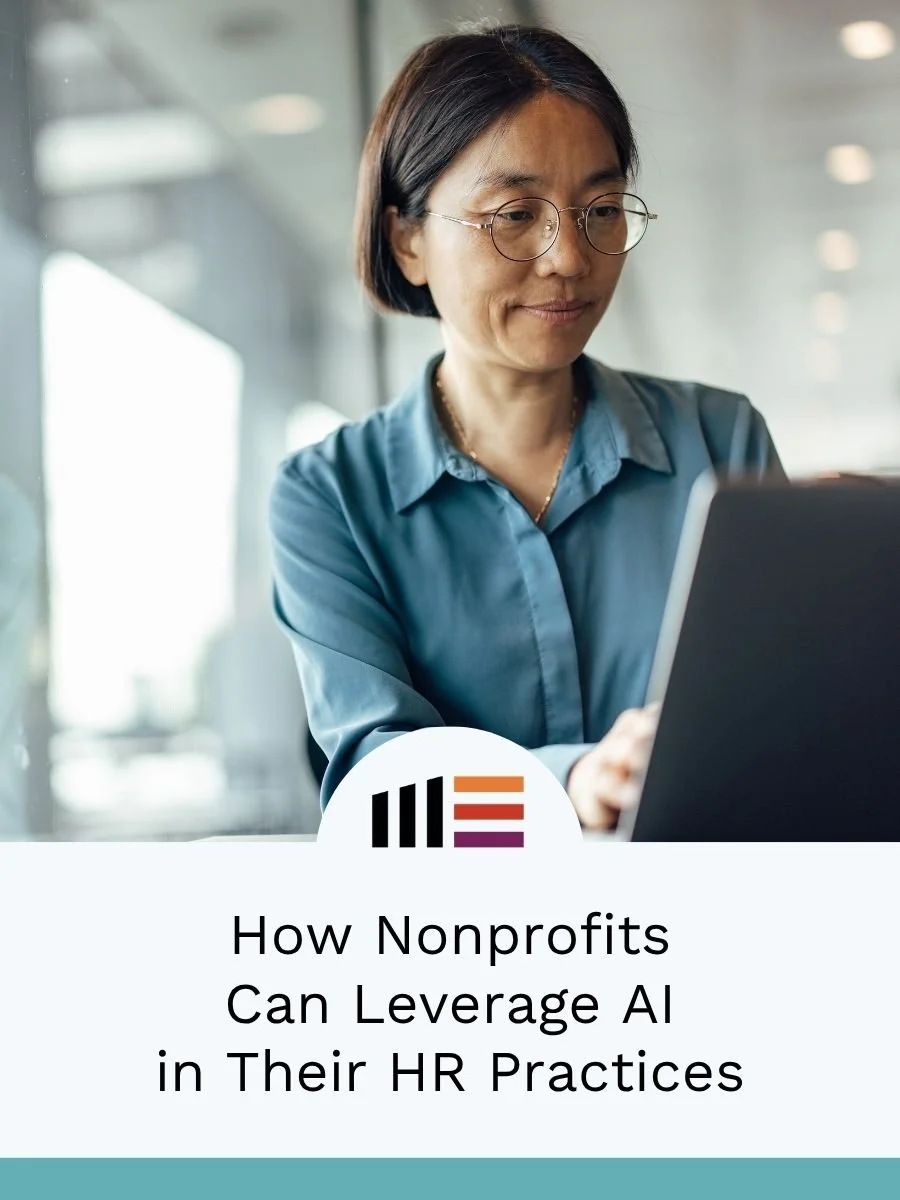
Artificial intelligence is no longer a futuristic concept reserved for Silicon Valley tech giants. It's here, it's accessible, and it's quietly transforming the way organizations manage their most important asset — their people.
For nonprofits, the timing couldn't be more relevant. HR teams in the sector are routinely asked to do more with less — smaller budgets, leaner staff, and a workforce that is simultaneously passionate and prone to burnout. AI won't solve every HR challenge, but used thoughtfully, it can free up time, sharpen decision-making, and help mission-driven organizations compete for talent in ways they previously couldn't.
Here's a practical look at where AI can make the biggest difference in nonprofit HR — and what to keep in mind as you begin exploring it.
1. Talent Acquisition: Smarter, Faster, More Equitable Hiring
Recruiting is where AI has had the most immediate and measurable impact on HR. For nonprofits that often lack a dedicated talent acquisition team, AI tools can act as a force multiplier — automating time-consuming tasks so that staff can focus on the human elements of hiring that actually matter.
Practical applications include:
Writing job descriptions that are clear, compelling, and inclusive — AI tools can flag biased language and suggest more equity-centered phrasing
Screening resumes to surface qualified candidates faster, reducing the time-to-review that often causes nonprofits to lose candidates to faster-moving employers
Automating candidate communications — scheduling interviews, sending status updates, and following up with applicants — so no one falls through the cracks
Customizing job postings for different platforms and audiences to improve reach and relevance
The result? A hiring process that is more efficient, more consistent, and more competitive — even for organizations without a full HR department.
2. HR Administration: Reclaiming Time for Mission-Critical Work

One of the most practical and immediate uses of AI in nonprofit HR is administrative automation. Think about how much time your HR staff — or the executive director wearing an HR hat — spends on tasks like drafting offer letters, updating policy documents, creating onboarding checklists, and answering routine employee questions.
AI tools can handle much of this work in a fraction of the time. Platforms powered by generative AI can draft HR communications, generate first versions of policies, build onboarding materials, and even serve as an internal HR knowledge base that employees can query directly.
For small and mid-sized nonprofits where one person manages HR alongside three other job responsibilities, this kind of time savings isn't a luxury — it's a lifeline.
3. People Analytics: From Gut Instinct to Data-Driven Decisions
Nonprofits have historically underutilized data in their HR practices. Decisions about hiring, compensation, staffing levels, and retention have often been made based on instinct, relationships, and available budget — not evidence.
AI-powered people analytics changes that equation. With the right tools and data, nonprofits can:
Identify turnover patterns before they become a crisis — understanding which roles, departments, or tenure ranges are most at risk
Forecast workforce needs based on program growth, grant cycles, and organizational planning
Measure employee engagement through sentiment analysis and pulse surveys that surface real-time insights rather than waiting for the annual review
Optimize team structures by identifying gaps in skills, capacity, or coverage that may not be visible at the surface level
For a sector where every hire and every departure carries significant organizational weight, having data to guide decisions isn't just smart — it's responsible stewardship.
4. Learning & Development: Upskilling at Scale
Investing in employee development is one of the most effective retention strategies available to nonprofits — and one of the most underfunded. AI-powered learning platforms are beginning to change that by making personalized, on-demand training accessible and affordable.
These platforms can assess skill gaps across your workforce, recommend targeted learning pathways for individual employees, and track progress over time. For nonprofits with diverse teams spanning programs, operations, development, and finance, this kind of customized learning at scale was previously impossible without significant investment.
AI is also reshaping how nonprofits hire for development roles. Skills-based hiring — evaluating candidates on what they can do rather than where they went to school or what titles they've held — is gaining traction, and AI tools that assess competencies rather than credentials are helping nonprofits access a broader, more diverse talent pool.
5. Employee Wellbeing: Catching Burnout Before It Becomes Attrition
Burnout is one of the defining challenges of the nonprofit workforce. Staff who are deeply committed to their mission often give more than is sustainable — and by the time HR notices, it's frequently too late to intervene.
AI-enabled wellbeing tools offer a new layer of visibility into how employees are actually doing. Anonymous pulse surveys, sentiment analysis tools, and engagement platforms can surface warning signs early — giving HR leaders the opportunity to respond proactively rather than reactively. When an employee is disengaging, the data can show it weeks or months before a resignation letter lands on your desk.
This doesn't mean replacing human connection with algorithmic monitoring. It means using technology to supplement the conversations that HR teams should already be having — making those conversations more informed and more timely.
What AI Cannot Replace
It's worth being clear about what AI can and cannot do in a nonprofit HR context.

AI can process data, automate tasks, draft content, and identify patterns.
What it cannot do is build trust, demonstrate empathy, navigate a difficult employee relations situation with sensitivity, or make the kind of values-based judgment calls that define good HR leadership in mission-driven organizations.
The best AI implementations in nonprofit HR are ones where technology handles the transactional so that humans can focus on the relational. The hiring decision still belongs to a person. The performance conversation still requires a manager. The culture still has to be built by people who believe in the mission.
AI is a tool — a powerful one — but the heart of your HR practice should always remain human.
Getting Started: A Practical Framework
If your nonprofit is ready to begin exploring AI in your HR practices, here's a simple framework to start with:
Start with one use case. Don't try to transform everything at once. Pick the area of highest friction — whether that's job description writing, onboarding documentation, or resume screening — and pilot an AI tool there first.
Establish an AI use policy. Before deploying any tool, clarify how AI will and won't be used in HR decisions. Who reviews AI-generated outputs? What data will be processed? How will you protect employee privacy? Having these guardrails in place protects your organization and your staff.
Audit for bias. Any AI tool used in hiring or performance management should be regularly reviewed to ensure it is not producing discriminatory outcomes — particularly for marginalized groups who are already underrepresented in many nonprofit leadership pipelines.
Invest in staff training. AI tools are only as effective as the people using them. Make sure your HR staff and managers understand both the capabilities and the limitations of the tools you're deploying.
Keep humans in the decision seat. AI can inform, recommend, and accelerate — but it should never be the final decision-maker in matters involving people's livelihoods and careers.
AI is not coming for your HR department — it's coming to support it.
For nonprofits that have long been asked to do more with less, that's genuinely good news.
The organizations that will benefit most are those that approach AI adoption thoughtfully — identifying the right use cases, building the right guardrails, and staying grounded in the values that make mission-driven HR different from any other kind.
At Mission Edge, we help nonprofits build HR practices that are strategic, equitable, and sustainable — whether that means integrating new technology, strengthening your talent acquisition process, or developing the internal capacity your team needs to thrive.

Ready to build a smarter HR practice?
Contact Mission Edge today to learn how we can help your organization navigate the evolving landscape of nonprofit HR.